
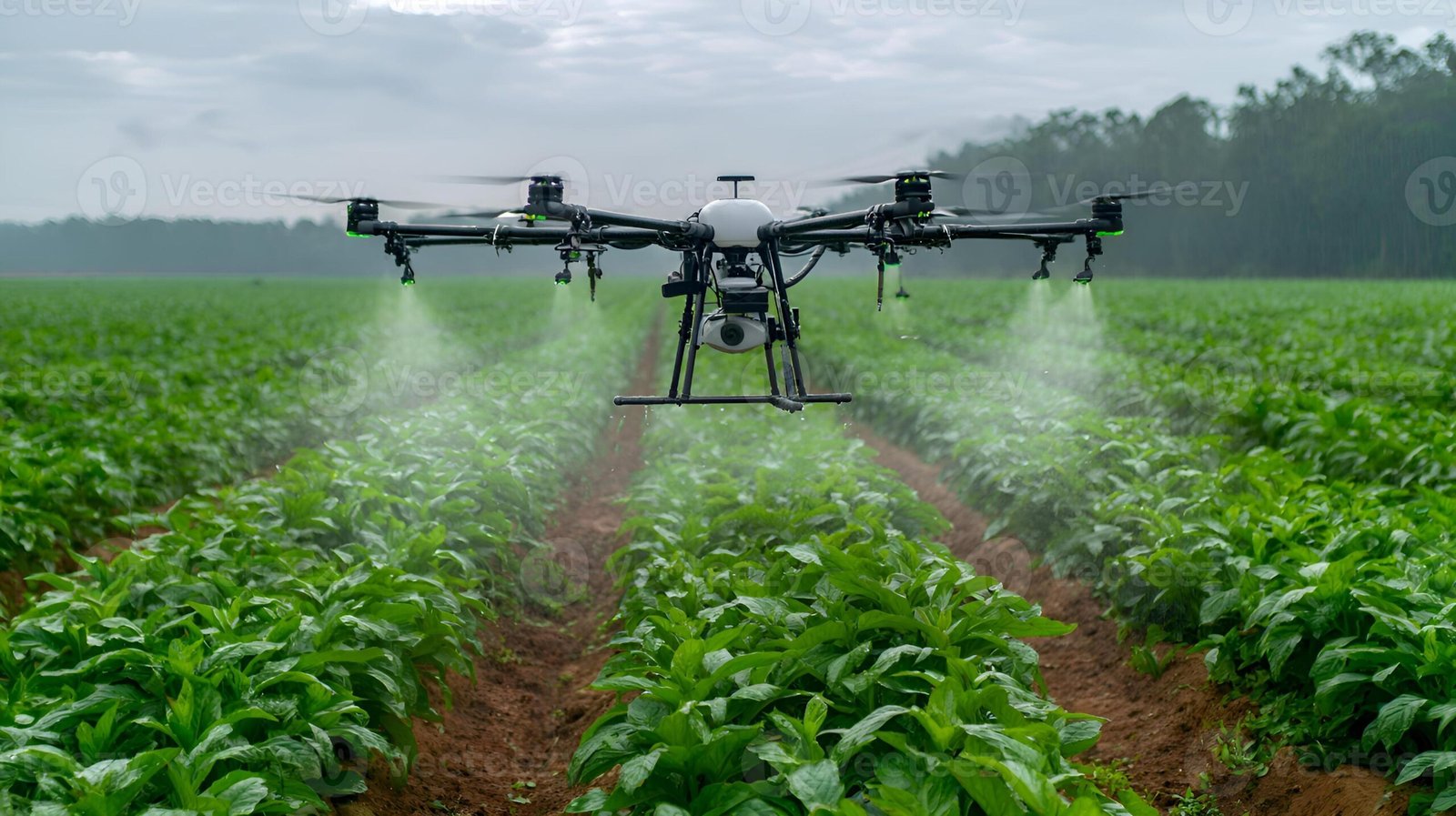
Unmanned Aerial Vehicles (UAVs), commonly known as drones, have rapidly evolved from military tools into versatile platforms used in agriculture, filmmaking, logistics, mapping, and research.
A drone is essentially an aircraft that operates without a human pilot onboard. Instead, it is controlled remotely by a pilot or autonomously through onboard computers and sensors.
Key Components of a Drone
Every drone consists of several critical subsystems:
Flight Controller
The flight controller acts as the brain of the drone. It processes sensor data and adjusts the motors to maintain stable flight.
Motors and Propellers
Brushless motors rotate the propellers, generating lift. By adjusting the speed of each motor, the drone can climb, descend, and maneuver.
Power System
Most drones use lithium batteries (LiPo or Li-ion), though hybrid and fuel-powered drones are increasingly used for longer missions.
Sensors
Sensors help drones stabilize and navigate:
- IMU (gyroscope + accelerometer)
- GPS
- Barometer
- Magnetometer
- Optical flow cameras
Communication System
Drones communicate with the ground station using radio links, often in the 2.4 GHz or 5.8 GHz frequency bands.
Major Types of Drones
Multirotor Drones
The most common category used in photography and inspection.
Examples:
- Quadcopters
- Hexacopters
- Octocopters
Fixed-Wing Drones
These drones resemble airplanes and are used for long-range missions like mapping and surveillance.
Hybrid VTOL Drones
Hybrid drones combine vertical takeoff capability with efficient forward flight, making them ideal for long endurance missions.
Why Drones Matter
Drones are transforming multiple industries:
- Precision agriculture
- Infrastructure inspection
- Disaster response
- Scientific research
- Logistics and delivery
As sensors, batteries, and AI systems improve, drones will play an increasingly important role in the global economy.